




• Connect with us
  • Subscribe to Our Feeds
  • Connect with us on Facebook
  • Follow us on Twitter
Free the Children & Me to We: Redefining possible
Profiles
by Elisa Birnbaum
on March 06, 2012

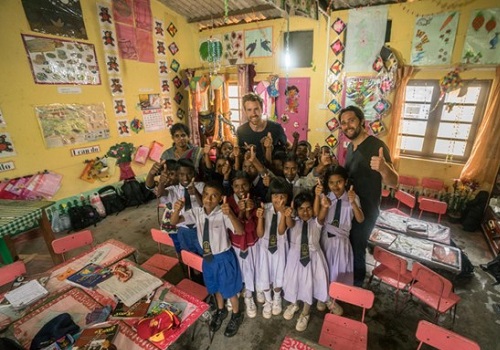
Mama Jane is leading our group of struggling men and women as we traverse the narrow road from the Mara River back to her home, buckets of water slung across our backs, balanced precariously with the help of tethered rope and community encouragement. Halfway up I stop, exhausted, and pass the load—now slipping from my sweaty grasp—to my teammate, tagging her as “it,” with the task of completing the journey. We’re in Emori Joi, a Kenyan village in South Narok, Kenya, on a traditional water walk, tracing the route women here (“mamas”), have taken for years to meet their laundry, cooking and bathing needs. Every single day. Not once but five times. Often while carrying babies, machetes and firewood. Just another day for the Mamas.

 
In Conversation with Antony Bugg-Levine
Interviews
by Elisa Birnbaum
on March 06, 2012

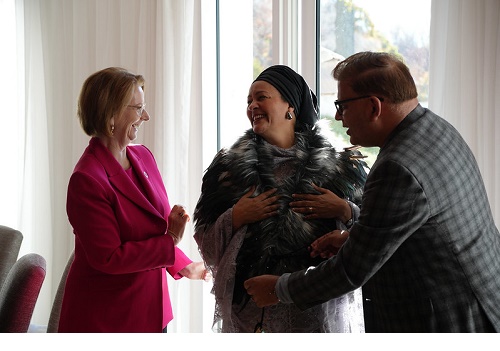
In our continuing In Conversation Series, we speak with Antony Bugg-Levine, a pioneer of the impact investing field and co-author of Impact Investing: Transforming How We Make Money While Making a Difference.


Click here to listen to an excerpt from our interview and read on to get the full story.

There seems to be an error with the player !


Conversation with a Canadian B Corp: Ecojot
Interviews
by Natalie McFarlane
on March 06, 2012

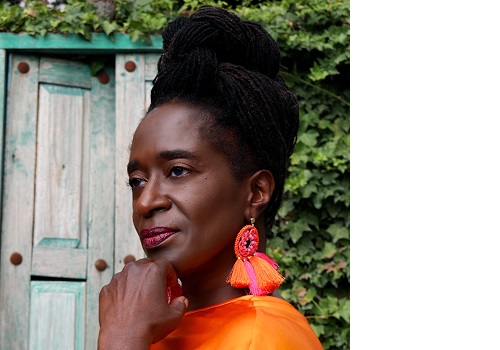
EcojotEcojot is an eco-friendly stationery brand that uses 100% post-recycled materials. It is also among Canada’s founding certified B Corps, with manufacturing and distribution facilities based in Scarborough, Ontario and products distributed throughout Canada, the United-States, Europe and Australia. The brand was created by designer Carolyn Gavin, her brother Mark Gavin and family. I recently sat down with Mark to discuss what Ecojot’s B Corp experience has been like so far.

 
Social Enterprise Dragons breathe fire into business
Ear to the Ground
by Mike Rowlands
on March 06, 2012

Social Enterprise DragonsSocial entrepreneurs don’t get nearly enough credit. They step up to tackle some of their communities’ most vexing problems; they work with minimal resources, leveraging every last penny to achieve their goals; and they measure success at social, environmental and financial bottom lines. Enterprising Non-Profits’ Social Enterprise Dragons event shines a spotlight on these leaders, their organizations, and their challenges. The annual event features three finalists (from among dozens of applicants) who endure direct, challenging questioning from expert "dragons," for the promise of prizes that will accelerate their organizations’ success.

 
5 Public policy “tweaks” to support social enterprise
How To
by David LePage
on March 06, 2012

Social enterprises use a business model to achieve social outcomes. That’s a valuable contribution to creating healthy and sustainable communities. So what do we need to do to support their development, growth and success? In the past several years, the Enterprising Non-Profits Program (enp) and the Social Enterprise Council of Canada (SECC) have used a simple but interrelated framework to define the components required to create a supportive environment for social enterprise:

 
Bonsai People: How microcredit unleashes human potential
Movie Reviews
by Nicole Zummach
on March 06, 2012

When I was approached by filmmaker Holly Mosher to consider reviewing her film about Nobel Peace Prize winner Muhammad Yunus, it was a no-brainer. Not only is Yunus the founder of microlending pioneer, the Grameen Bank, he is also a great promoter of the "social business." I was sure I'd learn something from the film (and Yunus). After all, that's what documentaries do...they teach us new things. What I wasn't expecting was to be glued to my seat for two hours, mesmerized by The Bonsai People.

 
Value for Money: Changing the way we measure results
Features
by Kirsten Bernas
on March 06, 2012

Measuring social and economic impacts is vital to the growth of innovative community solutions


Every day, Shaun Loney sees positive change in the lives of his co-workers as a result of their participation at Building Urban Industries for Local Development (BUILD). BUILD is a social enterprise operating out of Winnipeg’s inner-city. Individuals with multiple barriers are hired to complete energy and water efficiency retrofits on private and public low-income housing units. Many participants have had contact with the criminal justice system and do not have a high school diploma or formal work history.

 
Stop focusing on feasibility studies
Opinion
by Assaf Weisz
on March 06, 2012

It’s my job to meet with social entrepreneurs every day. Our conversations typically focus on what they’ve done so far, and what they’ll do next to get their ventures off the ground. Often, those conversations take a turn toward dispelling common conceptions about what it takes to get a business in motion: investing in market research; delivering a business plan; entering into entrepreneurship competitions. Somehow, a focus on execution has escaped.

 
Social enterprise impacts: An inner-city revival
Profiles
by Marty Donkervoort
on March 06, 2012

Social Enterprise ImpactsIn 2000, Winnipeg’s Inner City, particularly the North End, was a community in crisis. It was exhibiting the severe effects of poverty. The unemployment rate in the inner city neighbourhood, at 16.8%, had increased to a point that was more than triple the average unemployment rate in the rest of the city. Houses were boarded up as they became uninhabitable, and many commercial properties along the main streets had been vacated. Boarded up properties, both residential and commercial, became targets for arson. Parts of the community appeared like a ghost town and the area was prone to violence as gangs established their turf. Crime flourished and Winnipeg earned the reputation as the murder capital of Canada. Many residents, both in the inner city and elsewhere, lived in fear.