Community Tourism is tourism designed to create value for communities, not just visitors. It gives communities influence over how tourism is developed and delivered, while strengthening local livelihoods, culture and decision-making, and ensuring communities share in the benefits tourism creates.
The success of tourism is often measured through arrivals, visitor numbers, spending and new products. But there is another data point worth exploring, one measured by this question: How much value stays with the people and organizations that make tourism possible?
Planeterra’s 2025 Impact Report offers useful evidence for exploring that question. Drawing on insights and data from Community Tourism organizations across 83 countries, the report highlights what happens when communities have meaningful participation in tourism and when travel businesses create pathways for them to access markets.
The numbers may demonstrate scale. But the more useful lessons are found in what sits behind them.
For travel businesses, Community Tourism offers more than a category of experiences to add to a product portfolio. It provides a different way to think about where tourism value comes from, who participates in the tourism economy, and what makes a partnership work over time.
Here are five lessons from the 2025 evidence.
1. Communities are not starting from zero. Access is often the missing link.
When a community enterprise is not reaching enough travellers, it can be tempting to assume that something new needs to be created. Often, it doesn’t.
Many Community Tourism Enterprises already have local knowledge, relationships, products, experiences and a reason for participating in tourism. What may be missing is access to the systems that connect those assets with demand.
That can mean market connections, distribution channels, product development, infrastructure, training or relationships with travel companies.
Big Deal Tours in Bolivia is one example. The community was already organized and actively developing tourism. It needed support to strengthen some infrastructure and connect with travel partners and market opportunities. With that support, the experience became integrated into the tourism market and began receiving travellers and bookings.
In 2025, Planeterra connected 53 new Community Tourism Enterprises to tourism markets, helping them build relationships with travellers and tourism partners.
The lesson for travel businesses is simple:
Before designing something new, look at what already exists.
Ask what a community enterprise has built, what is preventing it from reaching the market, and what your business can do to remove that barrier without taking ownership away from the people who created it.
That shifts the role of a travel company from creating an experience for a destination to helping an existing enterprise participate more fully in the tourism economy.
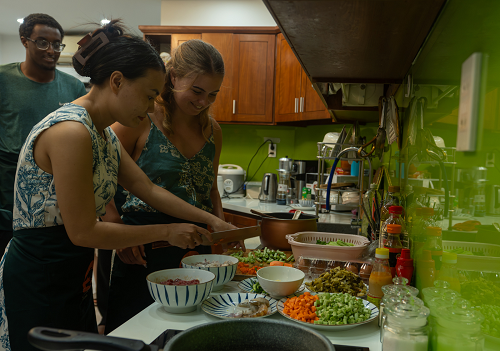
Catalyst for Change Vietnam partnered with Planeterra through a $2,200 grant and inclusion in the Global Community Tourism Network to support the “HerKitchen: Wellness Culinary Journeys” initiative
2. Market access can turn tourism capacity into ongoing income.
Funding can help an enterprise prepare for tourism. It can pay for infrastructure, equipment, training or product development. But preparation alone does not create a functioning tourism business. Demand matters too.
This is why funding and market access need to be considered together.
Sharing Seeds in Nepal illustrates how these pieces can connect. Planeterra supported the community with funding to prepare for visitors, including a covered outdoor space and hospitality training. The experience connects tourism with local agriculture, coffee production, beekeeping and handicrafts, creating additional income opportunities for participating households.
The model also includes a community fund: USD $2 from each visitor is reinvested into priorities identified by the community. The fund has supported a community kitchen that residents can use as well as tourism activities.
The distinction is important for travel businesses: Funding can help an enterprise prepare for tourism. Commercial partnerships can help create an ongoing market for it.
The two are complementary, not interchangeable.
So when assessing a potential community partnership, ask not only, “What support does this enterprise need?” but also, “How can our business create appropriate and consistent demand?”
3. Community Tourism is not a one-product category.
There is no single Community Tourism product. Across Planeterra’s network, Community Tourism takes different forms and works across different tourism markets. It can include cultural experiences, food, accommodation, nature-based activities, crafts, transport, tours and other visitor experiences.
It can also work across different commercial models and in both urban and rural settings. Planeterra’s 2025 work included Community Tourism integrated into hotels, FIT and tailor-made travel, small-group touring, larger group formats and local travel agencies.
In Crete, for example, work with multiple Travel Partners helped bring approximately 12 grassroots organizations into a local network where they could access training, coordination and opportunities to engage with tourism partners.
The point is not that every business should use the same model. It is that Community Tourism can be adapted to different markets rather than treated as a niche product outside the mainstream tourism system.
For travel companies, this creates an opportunity to incorporate community partnerships across destinations, customer segments and product types, provided the structure of the partnership supports meaningful community participation and benefit.
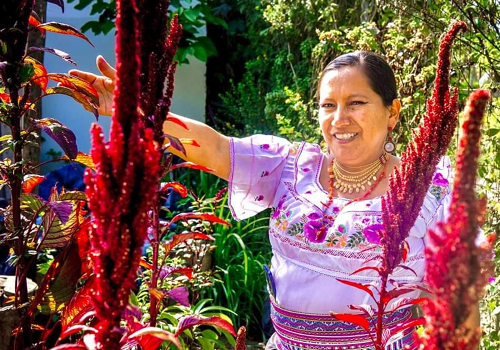
Quichua Native Travel, a community-led tour operator based in Cotacachi and Otavalo, Ecuador, partners with Planeterra to support local Kichwa communities through sustainable, experiential tourism
4. Follow the money, not just the visitor.
A traveller’s visit is easy to count. What happens to the money after the visit is harder to see. Yet that is where much of the difference between tourism models can be found.
In 2025, 15,704 people earned income from Community Tourism enterprises connected to Planeterra’s Travel Partners. The network also reported 3,383 new jobs, 7,689 people gaining new skills or knowledge, 6,102 women earning income and 6,902 young people earning income.
The report also asked Community Tourism partners how tourism income was affecting different aspects of their lives. Among those responding:
- 79% reported greater access to education for themselves or other community members.
- 71% reported an increased ability to meet basic needs such as food and transportation.
- 74% reported increased skills and knowledge to start or grow a business.
These figures should not be read as automatic outcomes of tourism. They reflect what participating organizations reported about the contribution of tourism income to their lives and communities.
Tourism income does not become community benefit simply because a traveller spends money locally. Where the money goes, who controls it, and what it makes possible all matter.
For travel businesses, this means looking beyond visitor numbers and asking better questions:
Who earns from this experience? Where does the revenue go? Does any of it contribute to shared community priorities? What can that income make possible over time?
Those are impact questions, but they are also questions about how a tourism product is structured.
5. Strong partnerships take time.
Community Tourism is not a quick intervention. An enterprise may need product development at one point, market access later, and support with training, infrastructure, environmental initiatives or new partnerships as circumstances change.
The 2025 report describes Community Tourism as shaped by the relationships, partnerships and market conditions that allow enterprises to participate meaningfully in the tourism economy. It also identifies trust, patience, respect, capacity building, market connections and long-term collaboration as important to the work.
The examples across destinations reflect this.
In Crete, collaboration connected grassroots organizations to one another as well as to tourism partners. In Bolivia, market connections helped an existing enterprise begin receiving travellers. In Nepal, tourism connected with local agriculture and small enterprise development.
The common thread is not a particular type of experience, it is relationship-building over time.
For travel companies, that means moving beyond the transactional question of whether an experience can be added to an itinerary. It means understanding the enterprise, communicating clearly, creating appropriate demand, considering operational realities and staying engaged as the partnership develops.
It also means being prepared to adapt. Markets change. Communities change. Businesses change. Strong partnerships need room to change with them.
What this means for travel businesses
The evidence from 2025 points to a broader lesson.
Community Tourism is not simply about creating a different experience for the traveller. It is about how tourism connects with the people, enterprises and places that make that experience possible.
Rather than ask how many community experiences a business offers, more useful questions include:
- How does the tourism model distribute value?
- Who owns the enterprise?
- Who makes decisions?
- Who has access to the market?
- Who earns the income?
- Where does that income go?
- What happens after the traveller leaves?
- And what kind of relationship exists between the community and the travel business?
These are impact questions. They are also commercial questions.
Travel businesses influence which experiences reach travellers, how those experiences are presented, how much demand they generate and which enterprises become part of tourism value chains.
The 2025 Impact Report does not suggest that there is one formula for doing this well.
What it shows is that when communities have meaningful participation in tourism, when enterprises can access markets, and when travel businesses invest in relationships rather than one-off transactions, tourism spending can contribute to livelihoods, skills, community priorities, cultural continuity and environmental action.
The opportunity is not simply to send more travellers to more places. It is to build tourism systems in which more of the value created by travel remains connected to the people and enterprises that make those experiences possible.
Planeterra is the world’s leading nonprofit using tourism to uplift communities. Planeterra helps local organizations and communities use tourism as a catalyst to improve people’s lives, protect their natural environments, and celebrate their culture. Put simply, it is a better kind of tourism – improving the lives of community members as they provide travellers with better experiences. Planeterra is more than just an agent of change and driver of communal well-being, they are tested and trusted relationship builders uplifting communities through tourism.
For more information, please visit www.planeterra.org and follow on LinkedIn, Instagram, and Facebook.