When philanthropies and financial institutions talk about financial inclusion, the conversation often begins with access. Can someone open a bank account? Can they make digital payments? Do they have a smartphone, reliable internet or access to a digital wallet?
Philanthropies and financial institutions need to answer these questions to build a financial system that meets the realities of today’s economy. But that conversation also raises three critical questions for philanthropy and the institutions working to expand financial inclusion: How might traditional approaches to financial services overlook the realities of the communities they aim to serve? Where are the gaps between what technology makes possible and what institutions are actually implementing? And how can partnerships prioritize community outcomes while ensuring long-term sustainability?
Another question may be just as important: Do people actually trust the systems they are being asked to use? And perhaps even more simply: Do people feel safer putting their money into a financial institution, or keeping it themselves?
The newest generation entering the workforce are growing up in a very different financial world. Money moves through apps. People shop, work and build businesses online. Creators can turn social media followings into substantial businesses, and freelancers can earn a living without ever receiving a traditional paycheck. At the same time, young people are increasingly aware of scams, fraud and the risks that come with putting financial information online.
That creates a complicated relationship with technology. People want the convenience of digital financial services, but they also want to know that their money is safe.
For philanthropy, financial institutions and technology companies, that tension deserves more attention. Distrust in financial systems doesn’t come from nowhere. For generations, financial institutions have sometimes been difficult to navigate, filled with complicated language and systems that can be confusing and overwhelming.
As a result, financial exclusion isn’t always obvious. It doesn’t necessarily mean someone has no bank account. It can mean someone has an account but doesn’t use it often. It can mean someone qualifies for a financial product but doesn’t understand the terms. Or it can mean someone has access to digital payments but isn’t comfortable moving significant amounts of money through a system they don’t fully understand.
In other words, a person can have access and still feel excluded.
That distinction is important for philanthropy. It is relatively easy to count the number of people who received a service, opened an account or participated in a program. It is harder to measure whether people actually feel more confident, more secure and more capable of managing their financial lives. But those outcomes matter. Without trust, people are less likely to participate. And without participation, access alone does little to create opportunity.
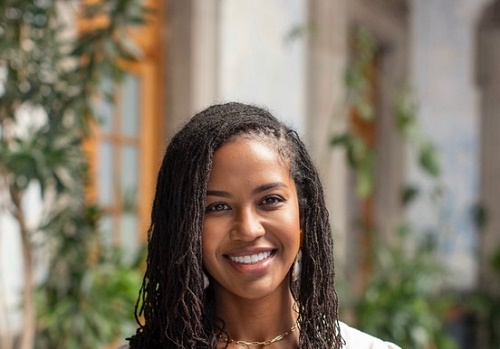
Financial inclusion requires more than just access, says Briana Marbury of the Interledger Foundation
In addition to all of the above, there is another challenge: The way people earn money has changed dramatically, while many financial systems still rely on assumptions about traditional employment. Consider a freelancer with strong annual income but no regular paycheck. Or a creator who earns significant revenue but whose income fluctuates from month to month. A small-business owner might have a successful business but struggle to meet lending requirements based on a conventional employment history. These people are participating in a very real economy, but traditional financial products don’t always know how to evaluate them.
The growth of the creator economy is one example. Forbes reported in 2026 that the global creator economy reached an estimated $205 billion in 2024 and is projected to reach $1.35 trillion by 2033. What used to be called a side hustle can now be a full-time business. That changes more than how people work. It changes how they get paid, save money, build credit and think about financial security. Financial institutions have an opportunity to rethink some of the assumptions built into their products and services. Technology has expanded the choices people have and it has changed what they expect from the institutions they interact with.
Today, people are accustomed to instant communication and on-demand services. Increasingly, they expect their money to move just as quickly. That is where the gap between what technology makes possible and what institutions actually implement becomes important. An instant payment is useful only if people understand it. A digital financial product is useful only if people trust it. And a new financial platform cannot solve problems for communities that don’t have the connectivity, education or support needed to use it. The question is whether consumers will have the knowledge and confidence to keep up.
This is where philanthropy has an important role to play. Financial literacy can not be an afterthought. People need to understand how financial products work, how to recognize fraud, how to evaluate risk and what questions to ask before making decisions about their money. Technology without education can create new opportunities, but it can also create new vulnerabilities.
Philanthropic organizations can help close that gap by supporting financial education, community-led research and programs that give people a voice in how financial services are designed. A community organization may know why residents don’t trust a particular financial institution. A nonprofit may have relationships with people who have traditionally been underserved. A local credit union may understand the needs of its community, while a fintech company may have the technology to address a specific problem.
Bringing those perspectives together can lead to better solutions. Because ultimately, the question isn’t just whether people can participate in the financial system. It’s whether they want to. People want to know that financial institutions understand their needs. They want transparency, education, and tools that reflect how they earn, save, and move money today (not twenty years ago).
Philanthropy can help build that foundation by investing in financial education, community-led innovation, digital infrastructure, research and partnerships that put people at the center of financial system design. The goal of financial inclusion should be more than giving people access. It should be creating systems people understand, trust and feel confident using.
Briana Marbury is the President and CEO of Interledger Foundation, a non-profit working to make financial access open and fair.