SEE Change recently spoke with Jim Fruchterman, a MacArthur Genius, CalTech-trained engineer, physicist and pioneering tech CEO about his new book, Technology for Good: How Nonprofit Leaders Are Using Software and Data to Solve Our Most Pressing Social Problems. Offering guidance and best practices, Technology for Good isn’t just a critique; it’s a practical roadmap providing accessible models for unlocking massive social impact.
Fruchterman has always advocated that technology could do more than serve the wealthiest 10 percent. Instead of embarking on a high-profile Silicon Valley career, he set off to answer the question: What if the future of innovation was measured not by profit, but by impact?
In our conversation, the long-time social entrepreneur discusses the many lessons learned from a formidable career in the sector, and how technology – when used effectively – can be embraced for greater impact.
What inspired you to write this book? What gaps were you hoping to address?
The biggest gap is the social sector time machine when it comes to technology. The only question is whether a given nonprofit will be behind by 5, 10, or 15 years! By telling the stories of how 60+ nonprofits are using technology to powerfully advance their mission, I hope to inspire many more nonprofit leaders to use technology in smart ways to create more social impact.
You distinguish between “good” and “bad” tech-for-good ideas. Can you share an example of why “95 percent of initiatives fail”? What could we be doing better to lower that failure rate?
I have many examples! The app that no one will download. Custom software for the small nonprofit which lacks any internal tech skills. The big fad (blockchain? Metaverse?)! Starting with technology, rather than solving real problems, is a common thread. We should always focus on building solutions that our community or staff will actually use, rather than what we think they should want!
You say that nonprofits lag behind the for-profit sector in terms of tech adoption but that the reality represents opportunities for social good. Can you explain?
The benefit of being a decade behind in adopting new technologies is that the for-profit world has invested billions in figuring out what that new technology is good for. Our job in the nonprofit sector is not to pioneer new technologies as it is to adapt proven tech to solve social problems. And, by the time it reaches the social sector, it generally should be much more affordable both to adopt and operate.
Many in the nonprofit sector are hesitant to invest significantly in tech due to limited budgets. They feel it will detract from investing in their social mission. Why do you believe significant tech investments are worthy long-term?
If a tech investment can help your organization serve forty or fifty percent more people with the same staff, I can’t imagine a more effective investment in social mission. For example, one of my social innovations was to shift the books for the blind field from shipping cassette tapes through the mail, which the big libraries for the blind were doing decades after cassettes became obsolete, to ebooks delivered via the Internet. That was more than ten times more cost effective!
Similarly, many in the sector look to AI as a driver of greater access. But you feel philanthropic investment in “AI for good” must also include structural inclusion. What would that look like? And why is it important?
The standard new large language model (LLM) generative AI products, like ChatGPT, Gemini, and Claude, have been trained on data that is not representative of the communities served by the nonprofit sector. Beyond that, many of them have been trained to be quite sycophantic. This combination has been proven to be quite dangerous, even deadly, not to mention rife with errors.
To use LLMs effectively, we need to constrain them with information that is better matched to our social sector needs. For most organizations, this involves keeping humans in the loop, so that the productivity gains of genAI don’t come at the expense of the people we serve. The most successful nonprofit genAI products today are all using a large dataset of “good” data, and then they tell the LLM (through product design) to answer all questions based on that quality dataset.
For example, there are now AI-driven job coaches and mentorship applications that were based on thousands of actual conversations between jobseekers and experienced coaches. Or medical chatbots told to base their answers on thousands of question and answer pairs, where the answers were written by professional human health educators. However, the nonprofits creating these products are in a tiny minority of organizations with internal tech and data teams! The typical nonprofit needs to wait for a product that is affordable and has the needed guardrails built in.
The nonprofit sector luckily cares about the people we serve more than profits. By placing the interests of our communities first, we can harness the power of this new genAI technology in ethical and effective ways.
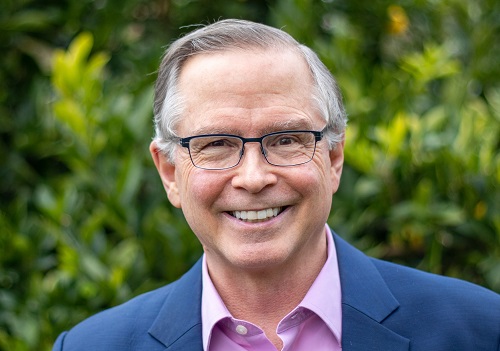
Jim Fruchterman is a leading social entrepreneur and the founder of Benetech and Tech Matters, award-winning tech nonprofits based in Silicon Valley. He is the recipient of the MacArthur Fellowship for his work with Benetech, and the Skoll Award for Social Entrepreneurship. He received a BS in engineering and an MS in applied physics from California Institute of Technology.