Alisha Wissanji is the founder of School of the Greats, an educational mentorship program with a unique approach to reaching students early, before learning challenges lead to disengagement from school. An immigrant to Canada herself, who has also welcomed refugee families into her home, Wissanji has seen firsthand how learning difficulties, language barriers and socioeconomic circumstances can affect a young person’s experience, and retention in school. That’s why she founded School of the Greats (École des Grands) in 2015, an organization that pairs elementary students from underserved communities with post-secondary students for free academic support and mentorship.
The model is built around a simple idea: academic support alone isn’t always enough. Students also need confidence, connection, resilience and a sense that continuing their education is possible for them. But it serves two purposes: while younger students receive individualized academic support and mentorship, participating post-secondary students also develop leadership, confidence and a stronger connection to their own education. The significance of the initiative is evident: In Quebec, 20% of boys will not earn a high school diploma or vocational qualification, while the figure among girls is more than one in ten. Meanwhile, across Canada the stats show that 22% of Canadian 15-year-olds did not reach the baseline level of proficiency in reading, while 26% did not reach it in mathematics.
The program has already reached more than 5,000 participants in Quebec, working with 39 elementary schools and establishing a presence across 71% of Quebec’s administrative regions. And the School of the Greats officially launched at the University of Ottawa this past October, marking the program’s expansion into English-speaking Canada.
SEE Change spoke with Wissanji to learn more about the origanization, its origins, the impact so far and the founder’s vision moving forward.
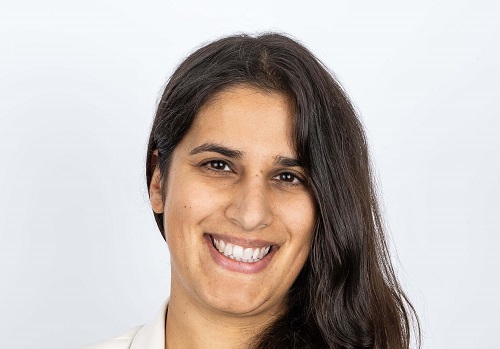
Alisha Wissanji has seen firsthand how learning difficulties, language barriers and socioeconomic circumstances can affect a young person’s experience
Tell us about your background and how education inequity became a calling
From a very young age, I witnessed firsthand how circumstances beyond a child’s control can shape their opportunities, sense of belonging, and future. Those experiences helped define my life’s mission: to ensure that every child, regardless of their background, has a genuine opportunity to succeed through education. I was born in Granby, Quebec, into a first-generation immigrant family with roots in India and Africa. My commitment to supporting vulnerable communities began when I was just eight years old, when my family opened our home to Afghan refugees fleeing war.
Over the following decade, we welcomed and supported more than 250 refugees. Even as a child, I was deeply moved by the challenges these families had endured and the barriers they faced in rebuilding their lives. But I also witnessed their extraordinary resilience and the difference that human connection, encouragement, and community support could make. These experiences taught me that opportunity is not simply about opening doors. It is about ensuring that people have the support, confidence, and resources they need to walk through them.
That conviction eventually led me to establish Foundation W., whose mission is to prevent and reduce poverty through education, and to develop its flagship program, School of the Greats (L’École des Grands). For me, educational equity is about much more than academic achievement. It is about dignity, belonging, confidence, and ensuring that a child’s future is not determined by the circumstances into which they were born.
What’s the challenge that you’re trying to tackle? In other words, what have you learned about why students disengage with traditional education?
Canada’s public education system has made education broadly accessible, but access to education does not necessarily translate into equal opportunities for success. Children may attend the same schools and follow the same curriculum while facing vastly different circumstances outside the classroom. Socioeconomic disadvantage, language barriers, limited family resources, and unequal access to educational enrichment can all influence a child’s academic journey.
Over the years, I have learned that disengagement is not necessarily a reflection of a student’s ability or desire to learn. More often, it reflects an accumulation of barriers that gradually undermine a young person’s confidence, sense of belonging, and belief in their own potential.
For example, a child whose family has never had the opportunity to pursue postsecondary education may struggle to imagine college or university as part of their future. Another may have the motivation to succeed but lack access to the additional academic support or enriching experiences that other children take for granted. Importantly, these challenges do not disappear when students reach postsecondary education. College and university students also face difficulties related to academic perseverance, social integration, confidence, and belonging.
This is why we believe educational success must be supported at multiple stages. By strengthening academic resilience among elementary schoolchildren while creating meaningful opportunities for postsecondary students to develop confidence, leadership, and social connectedness, we can address challenges faced by both generations. Ultimately, preventing educational disengagement requires more than academic intervention alone. It requires positive role models, meaningful relationships, a sense of belonging, and opportunities that allow young people to recognize their own potential.
Tell us about your initiative and how it counters that challenge with traditional education?
School of the Greats (L’École des Grands), the flagship program of Foundation W., is one of Canada’s leading intergenerational educational mentorship programs. Its mission is to strengthen educational success and academic resilience while contributing to the prevention and reduction of poverty through education. Launched in Quebec in 2015, the program brings together elementary schoolchildren from disadvantaged communities with volunteer college and university student mentors, creating meaningful relationships that benefit both generations.
What distinguishes School of the Greats is that our approach goes beyond traditional tutoring. While personalized homework assistance in language and mathematics is an important component, the program combines academic support with hands-on scientific discovery, positive role modelling, and intergenerational mentorship.
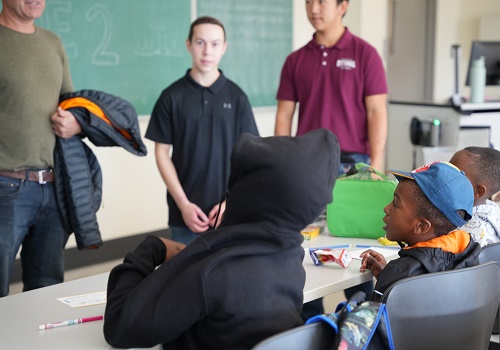
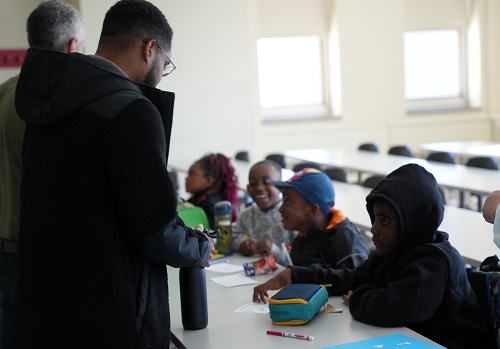
Every Saturday morning, participating children visit a local college or university campus, where they are welcomed by their mentors. Activities take place in classrooms and laboratories, allowing children to strengthen their academic skills, discover science, and experience postsecondary education in a welcoming and inspiring environment. For many children, simply setting foot on a college or university campus can change the way they imagine their future. Higher education becomes something tangible, accessible, and achievable. We also recognize that access must be meaningful. The program is entirely free, and transportation and breakfast are provided to remove practical and financial barriers to participation.
Equally important is the reciprocal nature of our mentorship model. Elementary schoolchildren benefit from encouragement, academic support, and positive role models, while college and university mentors develop confidence, leadership, social connectedness, and a stronger sense of purpose.
The program is built on close collaboration among educational institutions, elementary schools, community stakeholders, volunteers, and Foundation W. By mobilizing existing educational infrastructure and community resources, we have developed an accessible, sustainable, and cost-effective model that can be replicated in different communities. We are not trying to replace traditional education. We are strengthening the conditions that allow students to benefit fully from it, while demonstrating that educational success can be built through solidarity between generations.
How do you measure the impact of your organization so far?
What makes our approach particularly distinctive is that we evaluate the impact of the program on both groups of beneficiaries: elementary schoolchildren and their college and university mentors. Since its creation in 2015, School of the Greats has reached over 5,000 beneficiaries across Quebec and Ontario. In Quebec, the program has established a presence in 71% of the province’s administrative regions, prioritizing elementary schools serving socioeconomically disadvantaged communities.
Beyond these participation figures, our impact assessments have documented encouraging educational and social outcomes. Among elementary schoolchildren, evaluations have reported a 7% relative improvement in mathematics grades. Research conducted between 2016 and 2023 also found that vulnerable boys participating in the program maintained their mathematics grades, while non-participants experienced a 9% decline. In science, participating boys maintained their grades, while non-participants experienced a 3.2% decline.
The benefits extend to postsecondary mentors. Our evaluations identified improvements in social adjustment, including a 4% improvement among female mentors and a 10% improvement among male mentors. Male mentors also demonstrated measurable improvements in perceived competence and academic autonomy. These findings reinforce a fundamental principle at the heart of our work: mentorship is a reciprocal educational relationship. Helping a younger student succeed can also strengthen a mentor’s own educational and personal development. Another important aspect of our model is its cost-effectiveness. Through strong institutional and community partnerships, School of the Greats operates at an estimated program cost of approximately $4 per participating child per hour.
For us, impact is about bringing together measurable educational outcomes, positive social benefits, accessibility, and a model that can be scaled sustainably. Our ambition is not simply to reach more children, but to continue building a rigorously evaluated educational mentorship model that can contribute to greater educational equity across Canada.
How has your experience welcoming Afghan refugee families shaped your approach to educational opportunity?
Welcoming Afghan refugee families into our home from the age of eight fundamentally shaped my understanding of educational opportunity, inequality, and the transformative power of human connection. Through those experiences, I witnessed how circumstances entirely beyond a child’s control, including war, displacement, language barriers, and financial hardship, could affect their ability to learn, belong, and envision a future for themselves.
But I also witnessed something equally powerful: the extraordinary potential that emerges when people feel welcomed, supported, and encouraged.
Those experiences taught me that creating equal opportunity requires more than simply providing access to education. We must also recognize and address the barriers that prevent children from fully benefiting from it. That philosophy is deeply embedded in School of the Greats. When children from disadvantaged communities enter a college or university, meet mentors who believe in their potential, and discover that these institutions can be welcoming and accessible, we are doing more than supporting their academic development. We are helping them expand their understanding of what is possible.
My family’s experience also taught me that helping others is never a one-way relationship. The families we welcomed enriched our lives just as profoundly as we hoped to enrich theirs. This principle of reciprocity is central to our mentorship model. The children learn from their mentors, but the mentors also grow through the experience of supporting younger students.
At its heart, School of the Greats is built on the belief that educational success and social progress are collective responsibilities, and that by helping others succeed, we can also grow ourselves. That belief continues to guide everything we do through Foundation W. and School of the Greats.
Why have you decided to expand now? How does entering into Ontario fit into your long-term vision?
Our expansion into Ontario represents an important milestone for Foundation W. and School of the Greats, and a significant step toward our long-term ambition of making our educational mentorship model accessible to communities across Canada. Our long-term ambition is bold: to expand School of the Greats across Canada’s English-language education system and ultimately reach one million students by 2040. But our vision is about much more than numbers. We want to demonstrate that educational institutions and communities can work together to prevent disengagement, strengthen academic resilience, and help break the intergenerational cycle of poverty.
Since launching in Quebec in 2015, we have demonstrated the potential of an intergenerational mentorship approach that brings together elementary schoolchildren and postsecondary students, generating meaningful educational and social benefits for both groups. Over more than a decade, we have also developed, refined, and evaluated a model that combines measurable impact, strong community engagement, accessibility, and low operating costs.
Today, School of the Greats has grown into one of Canada’s leading intergenerational educational mentorship programs. Our expansion is a natural continuation of this work and reflects our belief that the model can benefit communities well beyond Quebec. Ontario represents an important opportunity to build new partnerships with colleges, universities, elementary schools, and community organizations that share our commitment to educational equity. Our launch in Ottawa is particularly meaningful because it allows us to extend our approach into English-language educational environments while preserving the essential principles that have guided the program since its inception.
The challenges we are addressing are not unique to Quebec. Across Canada, children face barriers to educational success because of their socioeconomic circumstances, family backgrounds, and unequal access to enrichment opportunities. At the same time, postsecondary students can benefit from meaningful opportunities to strengthen their confidence, leadership, academic resilience, and connection to their communities.
What makes our vision achievable is the collaborative nature of our model. Rather than creating new educational infrastructure, we bring together existing institutions, community partners, and volunteer mentors around a shared commitment to educational success. Ottawa is an important step toward that future, and we hope it will be the beginning of many more partnerships across the country. Ultimately, I believe that when we invest in the educational success of one generation, while empowering another to become part of the solution, we create the conditions for lasting social change.