Intrepid Travel, a global, purpose-led adventure travel company for small groups, and a B Corp, recently launched The Intrepid Effect. The new global purpose platform is designed to make the company’s impact more tangible and accountable. Rather than leading with broad sustainability claims or abstract metrics, the platform uses real-world stories from Intrepid trips to show how travel can support local communities, social enterprises and more responsible tourism models.
To learn more, SEE Change spoke with Mikey Sadowski, Intrepid’s VP of Global Communications, about how purpose-led companies can communicate impact more responsibly in a changing regulatory and cultural environment. We discussed what inspired this new initiative – and its growing importance. We examine the tension between greenwashing and greenhushing, the challenge with broad sustainability language and what responsible travel companies – particularly a B Corp – owe to the communities they feature.
What inspired the launch of the new purpose platform?
The Intrepid Effect was inspired by a desire to communicate our impact in a way that is more tangible for our travellers. Rather than leading with aspirational claims or unverified impact metrics, which can be commonplace in the travel industry, it focuses on storytelling and real-world examples that enable travellers to more clearly understand the positive effects of their trips. At Intrepid, we know we create positive impact by supporting organisations that are a part of our trips, including them as an Intrepid Foundation partner, or providing training and support that allows them to grow, but this story wasn’t necessarily being told to our customers.
Can you give us examples of social entrepreneurial projects the platform will showcase?
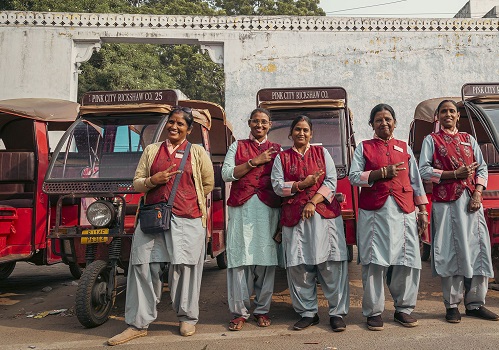
One example is the Pink City Rickshaw Company in Jaipur, India. This women-led social enterprise trains women to drive and maintain e-rickshaws for city tours, while building financial and business skills, creating pathways to independence and long-term opportunity. Travellers experience the tuktuk tours firsthand on trips including the India Women’s Expedition and Rajasthan Experience, offering a clear example of how travel can directly support local women and communities, and can support the cause through The Intrepid Foundation.
Another example is a social enterprise in Vietnam called KOTO, the country’s first social enterprise restaurant which provides disadvantaged young people with hospitality training and real employment pathway. We’ve worked with them for over 20 years (the organisation was founded by an ex-Intrepid leader and is a benefactor of The Intrepid Foundation). Nowadays our travellers visit multiple times a week to support training of the youth. Travellers often eat there as part of trips like Classic Vietnam and Cambodia or Vietnam Discovery. Something as simple as a bowl of pho ends up connecting directly to a much bigger story about skills, opportunity, and long-term change.
How does the growing tension between greenwashing and greenhushing impact both consumers and Intrepid’s approach to storytelling?
For consumers, the landscape has become increasingly confusing. On one hand, there is widespread concern about greenwashing, where environmental or social claims are overstated or poorly substantiated. On the other, some organisations are now becoming more cautious and “greenhushing,” choosing to say less to avoid scrutiny altogether. The result is that travellers are often left trying to interpret vague language or unverified claims without enough context or evidence to understand what is genuinely meaningful.
In a changing regulatory landscape, we want to ensure travellers can clearly see and understand the small difference their individual journeys make. The Intrepid Effect connects experiences to real outcomes for host communities and places, underpinned by measurement. It’s substantiated storytelling, where the words are backed by the work.
Why has broad sustainability language become less effective?
Vague language makes it difficult for people to understand what impact is actually being achieved, especially when paired with aspirational claims or unverified metrics. Travellers today are asking more informed questions and expect greater transparency, evidence and specificity. Broad terms like “sustainable” or “eco-friendly” can mean almost anything if they’re not clearly defined or backed up with action.
That’s why we’re focusing on real-world examples and streamlining our impact storytelling in a way that brings impact to life in a more tangible way and sits at the core of our business – our experiences and product. Alongside The Intrepid Effect, we’ve also introduced a new Responsible Marketing and PR Policy that commits to honesty and transparency, and avoidance of terms such as “sustainability” and “regeneration”, as well as updated standards for public relations, data and digital marketing.
What do responsible travel companies owe the communities they feature?
Responsible travel companies have a clear responsibility to ensure that tourism benefits are shared fairly and meaningfully with the communities they operate in. That starts with respect, recognising that communities are not just backdrops for experiences, but active partners in shaping how tourism is designed and delivered.
It also means accountability and long-term commitment. Tourism should be developed in consultation with local people, and the economic benefits should remain within those destinations wherever possible. This includes prioritising local leaders, locally owned accommodation, and community-based experiences that support local livelihoods.
Equally important is how these stories are told. Companies have a responsibility to represent communities ethically, ensuring local voices are included with accuracy, dignity and authenticity, rather than being filtered solely through a brand lens. “Locally-led” is a foundational communications territory for us at Intrepid Travel, and it presents itself in almost everything we do.
How does being a certified B Corp influence how Intrepid thinks about its work and the communication of those stories?
Being a certified B Corp shapes both how we operate and how we communicate. B Corps are independently verified to meet high standards of social and environmental performance, transparency and accountability, with a focus on continuous improvement. This provides us with a clear framework for how we measure and improve our impact, ensuring our actions are consistently assessed rather than self-defined.
B Corp standards continue to evolve, including updates this year that place greater emphasis on how companies communicate their environmental and social impact, with a stronger focus on verifiable data, transparency, and accountable storytelling. This has influenced our new purpose platform, reinforcing our commitment to evidence-based, and transparent storytelling, while avoiding vague or unsubstantiated claims. And it also pushes us to think about how we can take that compliance and create greater business value – in this case, this is value we have created in the form of storytelling and engagement for our travellers.